
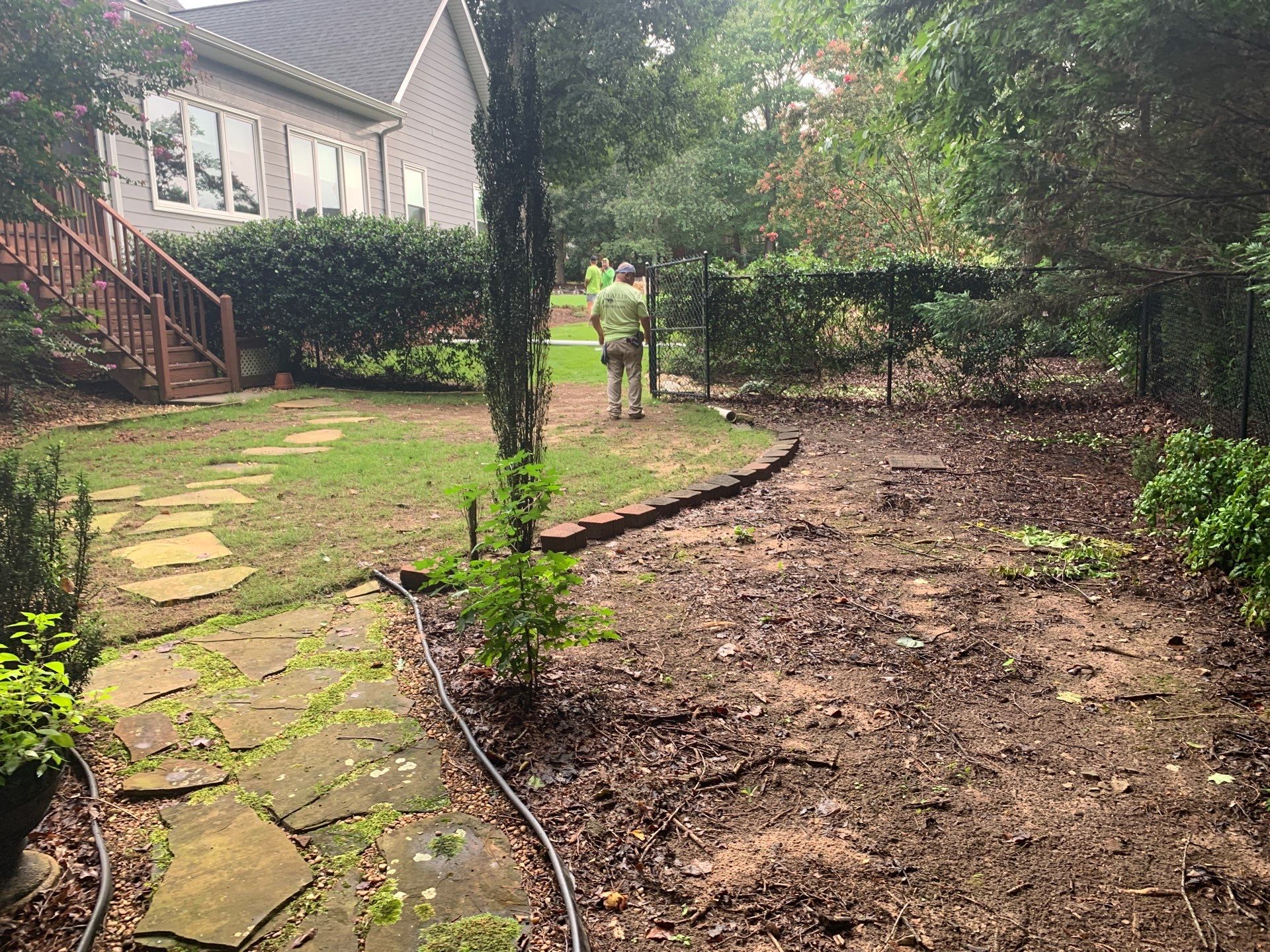
Fall gets a lot of attention for planting, cleaning up leaves, and getting the lawn ready for cooler weather. But it’s also a good time to pay attention to something that’s easy to overlook—where the water is going in your yard.
If you’ve noticed soggy areas, washed-out mulch, standing water, or soil slowly disappearing after a heavy rain, those are signs worth paying attention to. Drainage problems rarely get better on their own, and another season of rain can make a small problem much bigger.
Start With Where The Water Is Coming From
One of the first things we look at when evaluating a drainage problem is the source of the water.
Is it coming off the roof? Running downhill from another part of the property? Collecting in a low spot? Flowing across a driveway or patio? Maybe several things are contributing to the problem.
That matters because there isn’t one drainage solution that works for every yard.
Sometimes extending or tying in downspouts makes sense. Another property may need underground piping, grading, a catch basin, or a dry creek bed to help collect and redirect water. In some cases, erosion control may be just as important as drainage.
The goal is to understand how water is moving through the property before deciding how to manage it.
Look for the Clues Around Your Yard
You don’t necessarily need standing water to have a drainage problem. Your yard may already be showing you where water is causing trouble.
Watch for things like:
- Mulch or pine straw that repeatedly washes away
- Exposed soil or roots
- Channels forming through landscaped areas
- Soggy spots that stay wet long after the rest of the yard dries
- Water collecting near the foundation
- Areas of lawn that struggle because the soil stays too wet
- Soil washing away around slopes or retaining walls
A good time to look is during or immediately after a heavy rain. You can often see exactly where the water starts, the path it takes, and where it finally collects.
Why Address It in the Fall?
Fall gives homeowners an opportunity to deal with drainage and erosion problems before another winter and spring of rain has a chance to make them worse.
It can also be easier to see problem areas once summer growth begins slowing down. And if drainage work requires disturbing part of the lawn or landscape, taking care of it during the cooler months can give the property time to recover before you're ready to enjoy the yard again in spring.
Most importantly, fixing the source of a water problem can help protect more than just the grass. It may help prevent continued erosion, protect landscaped areas, and keep water moving away from places where you don't want it.
The Solution Should Fit the Yard
We’ve seen plenty of drainage problems over the years, and one thing is certain: every property is different.
A French drain may be the right answer in one situation and completely unnecessary in another. A dry creek bed might solve a drainage problem while also becoming an attractive part of the landscape. Sometimes a fairly simple downspout or piping solution is all that's needed.
That’s why we prefer to look at the whole property and understand what the water is doing before recommending a solution.
If you've been watching the same wet spot, washed-out area, or erosion problem come back every time it rains, fall is a good time to finally figure out why it's happening and what can be done about it.